

Overthinking is Masquerading as Shame

Image Credit: Andy Quezada
If you are someone who constantly asks yourself “Why am I like this?”, who catastrophises everything, or who gets caught in endless loops of thinking before making even seemingly small decisions, you’re not alone, and you’re not broken.
Overthinking isn’t a personality flaw.
It’s often a response to a quiet kind of shame.
“I can’t get this wrong.”
“People must think I’m odd.”
“What if I upset someone?”
“What if I can’t handle it?”
This blog is about how overthinking becomes a shield against shame and why the shield eventually becomes the problem.
Overthinking Instead of Feeling
When clients sit in front of me and ask:
“Why am I like this?”
“People probably think I’m weird… and you probably think I’m weird.”
“What do you think I should do?”
It can be very tempting to reassure them.
But reassurance doesn’t actually touch the place or underpin where these questions come from.
These phrases are often attempts to escape the immediate experience of shame, in other words, the worry that something inside is unacceptable or flawed.
Humanistic and Existential therapists noticed that when a person keeps moving “up into the head,” they’re usually moving away from themselves. Overthinking becomes a convenient detour around emotion, not because you’re weak, but because your mind believes that, whatever feeling you are trying to avoid might overwhelm you.
Overthinking is not you being difficult.
Overthinking is you protecting yourself.

Image Credit: Getty Images
The Existential Layer - We Avoid Ourselves to Avoid Shame
The existentialists wrote about this long before we carried it into the therapy room.
Kierkegaard described despair as the tension between who we are and who we think we’re supposed to be.
Overthinking often happens in that gap where you try to think your way toward being “the right kind of person.”
Sartre wrote that under the gaze of others, we become painfully self-aware.
Overthinking tries to anticipate that gaze, manage it and soften it, but to no avail as you may be aware by now.
Nietzsche warned against living “behind our own backs,” hiding away from our immediate experience.
Overthinking keeps us circling around life, rather than participating in it.
In all three cases, thinking about becomes a substitute for engagement as a way of avoiding the discomfort of really meeting yourself.
And shame is the emotion that sits squarely in the centre of that avoidance.
How Shame Creates the Conditions for Overthinking
This builds directly onto the previous blog about the shame-anxiety cycle. If you have not read it yet, have a little gander:
When shame turns on, the nervous system moves quickly into a threat state, in other words, a spike of sympathetic arousal. You may feel:
an internal rush
a tightening in the chest
a spike of self-criticism
a sense that something bad is about to happen
Your mind then sends out an “emissary” to try and calm the system: Overthinking.
It attempts to:
predict every possibility
remove uncertainty
eliminate risk
gain control
prevent the feeling of shame from ever being triggered again
But here’s the problem:
Overthinking tries to reduce shame but it ends up amplifying it.
You think more which leads you to feel worse which then leads to you thinking even harder which in turn makes you feel even more at odds with yourself.
The Neuroscience: Why Thought Doesn’t Soothe the Body
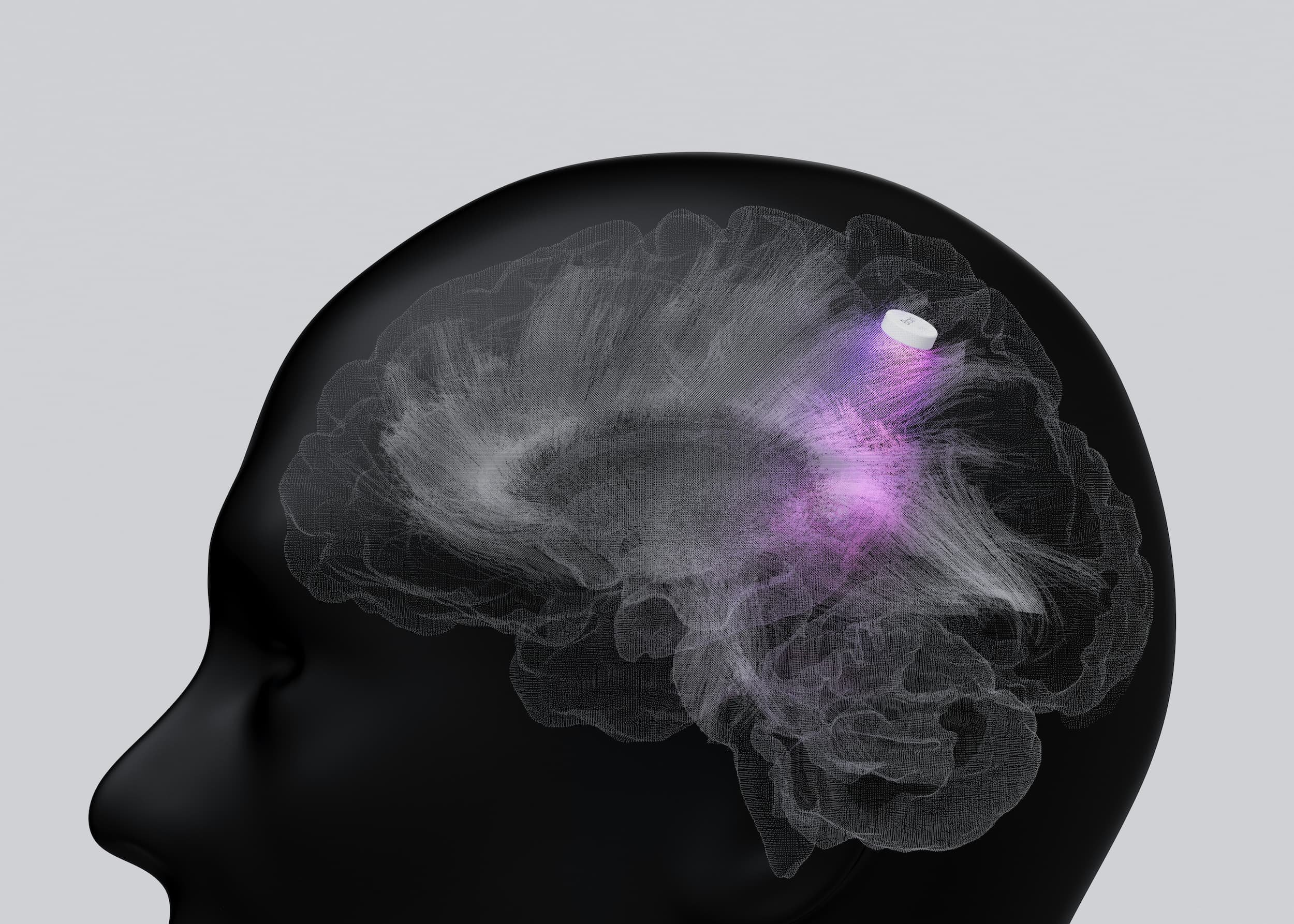
Image Credit: Planet Volume
Neuroscience research shows that:
Overthinking increases prediction error (the brain becomes hyper-alert to “what could go wrong” (Cornwell, et al., 2018; Robinson et al., 2013) . In anxiety and chronic worry, the brain’s predictive systems often treat possible threats as especially important, amplifying ‘prediction error’ signals about what could go wrong and promoting hypervigilance.
The prefrontal cortex goes into overdrive while emotional-processing regions stay activated (Hoffman et al., 2005; Makovac et al., 2020). Brain-imaging studies suggest that during chronic worry or rumination, frontal control areas (especially parts of the prefrontal cortex) are heavily engaged, while emotion-related regions like the amygdala remain active and strongly connected to them.
The nervous system remains mobilised, even though you feel like you’re “just thinking” (Stone et al., 2020). Studies show that when people get stuck in repetitive negative thinking, their autonomic nervous system often stays in a mild ‘stress’ mode where heart rate, skin conductance and other arousal markers remain elevated, even though they’re only thinking rather than facing an actual danger.
The body never receives the signal that the threat has passed (Brosschot et al., 2017). In chronic worry and rumination, the brain constantly turns on the stress response by mentally replaying or anticipating threats. This can delay the normal ‘switching off’ of the autonomic stress response, so the body stays in a half-mobilised state even when the actual event is over.
In other words:
You can’t think your way out of a threat response that started in the body.
This is why hours of analysis can still leave you tense, foggy, or frozen.
The Mental Patterns People Mistake for “Anxiety”
1. “Why am I like this?”
This question pulls you away from experience and it creates cognitive distance.
Instead of feeling what’s here, your mind tries to diagnose you.
It’s a form of self-avoidance dressed up as self-reflection.
2. “People must think I’m weird.”
A classic attempt to mentally prepare for rejection.
But when you worry not only that others think you’re odd but that I might think it too, something deeper is happening.
That’s shame projecting itself outward.
3. “Can you just tell me what to do?”
This might seem like seeking clarity.
But often it’s about outsourcing responsibility because responsibility feels risky, if you decide, you could be “wrong.”
And shame is always waiting to pounce on “wrong.”
4. Catastrophising everything
Planning for the worst makes sense when it felt like life ruined you before.
But long-term catastrophising keeps your nervous system in a relentless state of threat scanning.
It exhausts the body and convinces you the world is hostile, even when it isn’t.

Image Credit: Hrant Khachatryan
When Overthinking Becomes a Way of Not-Being
This is the deepest part of the shame–overthinking cycle:
Overthinking protects you, but it also prevents you.
It shields you from the emotional risk of being here, in your life, as yourself.
But it also prevents you from:
acting
resting
feeling
connecting
trusting
living with uncertainty
experiencing joy without analysing it
I’ve boldened one of them because it comes up with nearly every single client I work with.
If everyone could live well with uncertainty then I would be out of a job!
So What Now?
This blog isn’t about fixing overthinking, that comes in the next one.
This one is about understanding overthinking as something meaningful, not something defective.
Because when you see that your overthinking is not random, and not a sign that you’re weak…
…but that it’s a protective response to shame, activated by a nervous system trying desperately to keep you safe…
…it can become much easier to approach with compassion rather than self-criticism.
You soften.
You breathe differently.
You see the pattern rather than becoming the pattern.
And that’s the beginning of loosening its grip.

Image Credit: Curated Lifestyle
How Therapy Helps You Break This Pattern
Working together, I help you:
name the moments shame pulls you into analysis
understand the emotional risk your mind is trying to protect you from
interrupt the cycle with body-based grounding
reconnect with the part of you that wants to act, not avoid
find ways to meet life directly, rather than circling around it
You don’t have to keep battling your mind.
You can learn to recognise the cycle, and step out of it.
Overthinking is loud, but your life doesn’t have to be.
You don’t have to decide anything today. Perhaps just notice how this topic lives in you this week, in your thoughts, in your chest or stomach, in how you talk to yourself. That noticing alone is often where change quietly begins.
You may also like:
References
Brosschot, J., Verkuil, B., & Thayer J. (2017). Exposed to events that never happen: Generalized unsafety, the default stress response, and prolonged autonomic activity. Neuroscience & Biobehavioural Reviews. 74(Pt B), pp. 287-296.
Cornwell, B., Garrido, M., Overstreet, C., Pine, D., & Grillon, C. (2018). The Unpredictive Brain Under Threat: A Neurocomputational Account of Anxious Hypervigilance. Biological Psychiatry, 82(6), pp. 447-454.
Hofmann, S., Moscovitch, D., Litz, B., Kim, H., Davis, L., & Pizzagalli, D. (2005). The worried mind: autonomic and prefrontal activation during worrying. Journal of Emotional and Behavioural Disorders, 5(4), pp. 464-475.
Makovac, E., Fagioli, S., Rae, C., Critchley, H., & Ottaviani, C. (2020). Can't get it off my brain: Meta-analysis of neuroimaging studies on perseverative cognition. Psychiatry Research: Neuroimaging, 295.
Robinson, O., Overstreet, C., Charney, D., Vytal, K., & Grillon, C. (2013). Stress increases aversive prediction error signal in the ventral striatum. Proceedings of the National Academy of Sciences of the United States of America, 110 (10), pp. 4129-4133.
Stone, L., Lewis, G., & Bylsma, L. (2020). The autonomic correlates of dysphoric rumination and post-rumination savoring. Physiology & Behaviour, 224(113027).